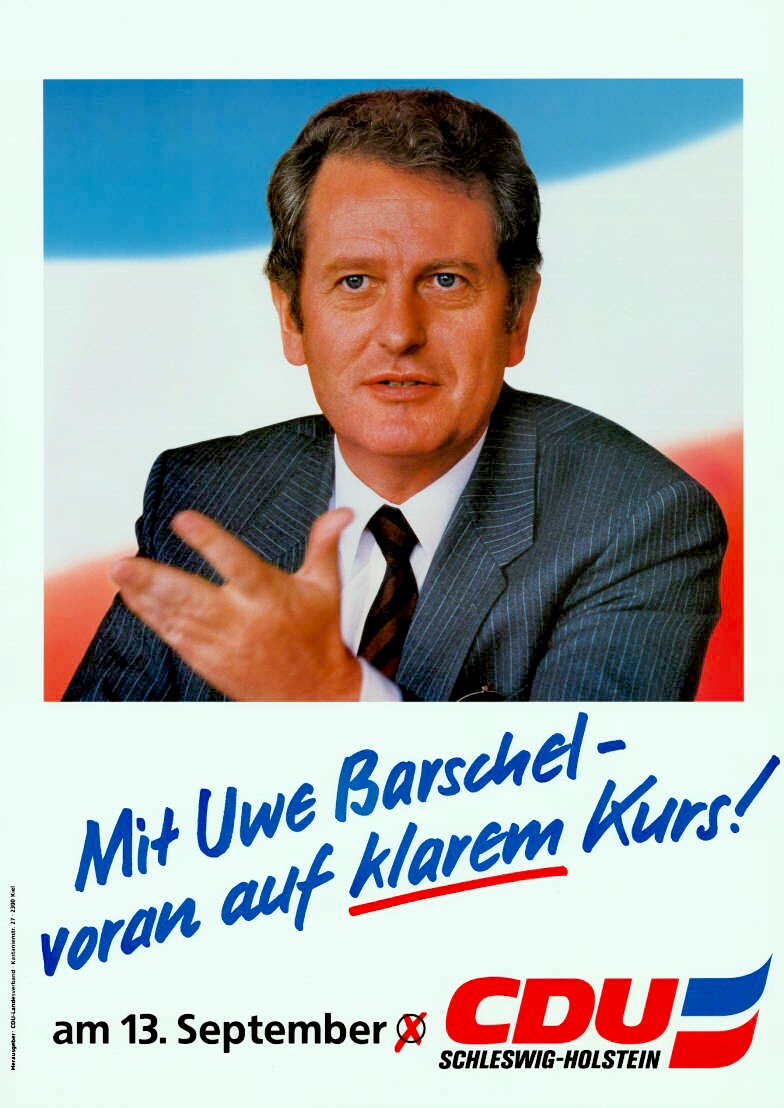
Germany's Enduring Enigma: Unraveling Die Affäre Barschel
In the annals of German political history, few events resonate with the same enduring intrigue and controversy as
Die Affäre Barschel. This saga, which unfolded in the autumn of 1987, became a byword for political scandal, trust betrayed, and a mystery that continues to captivate the nation decades later. At its heart lies the figure of Uwe Barschel, a charismatic and ambitious politician whose life ended abruptly and inexplicably, just a month after he staked his entire reputation on a solemn vow.
The Rise of a Political Prodigy and His Undoing
Uwe Barschel's political ascent was nothing short of meteoric. Born in 1944, he embodied the post-war German success story. Highly intelligent, he earned doctorates in both law and political science, laying a formidable academic foundation for his career. Joining the Christian Democratic Union (CDU), Barschel quickly distinguished himself. By 27, he was a member of the state parliament in Schleswig-Holstein. His journey through the ministerial ranks was equally swift: Finance Minister, then Interior Minister, before becoming Minister-President of Schleswig-Holstein at the remarkably young age of 38 in 1982. Under his leadership, the CDU even secured an absolute majority in the 1983 state elections, solidifying his image as a political force.
Barschel was the CDU's great hope, a man of considerable format who many believed was destined for even higher office, perhaps even the Chancellery. He cultivated an image of a diligent, family-oriented leader, famously declaring his family his "hobby" to cameras – a sentiment that resonated well with voters. His marriage to aristocrat Freya von Bismarck and their four children further polished his public persona.
However, beneath the gleaming facade, whispers began to circulate. Barschel's ambition was often described as boundless, his methods sometimes less than scrupulous. Subordinates often found his demeanor dismissive and rude. While adept at self-promotion and networking, these burgeoning shadows hinted at a ruthless streak that would ultimately contribute to his downfall. The first cracks in his polished image appeared when the CDU suffered significant losses in the municipal elections of March 1986, making Barschel visibly nervous as the crucial state elections of September 1987 loomed.
A Campaign Under Siege: The "Ehrenwort" and its Fallout
The 1987 Schleswig-Holstein state election was shaping up to be a formidable challenge for Barschel. His opponent, the charismatic Björn Engholm of the SPD, represented a significant threat. In a high-stakes move, Barschel engaged a journalist with a prior conviction for slander, evidently seeking robust support for the impending campaign. What followed was a series of allegations that rocked the political establishment: claims that Barschel's team had orchestrated a smear campaign against Engholm, including spying and fabricating stories to discredit him.
Under immense pressure, with his back against the wall, Uwe Barschel chose a dramatic and unprecedented course of action. On September 18, 1987, in a deeply unsettling press conference, he delivered what would become one of the most iconic and tragic statements in German political history: "
Ich gebe Ihnen mein Ehrenwort, dass die gegen mich erhobenen Vorwürfe haltlos sind" ("I give you my word of honor that the allegations made against me are baseless"). He appeared visibly strained, struggling to maintain composure, desperately trying to project an image of control and honesty. He coupled his personal word of honor with sworn affidavits, attempting a final, desperate tour de force to salvage his reputation and regain the trust of the citizens of Schleswig-Holstein.
This solemn vow, an "Ehrenwort," carries profound cultural weight in Germany, signifying an unbreakable pledge rooted in personal integrity. For Barschel to invoke it in such a public manner underscored the gravity of the accusations and his perceived innocence. Yet, the public's perception was already shifting. Despite his denial, the affair had taken its toll, and Barschel eventually stepped down as Minister-President.
For a deeper dive into this pivotal moment, explore
From Solemn Vow to Tragic Death: The Barschel Scandal of 1987.
The Tragic Aftermath and Lingering Questions
Barely a month after his fateful declaration, the Barschel affair took an even darker turn. On October 11, 1987, Uwe Barschel was found dead in a bathtub in room 317 of the Beau-Rivage Hotel in Geneva, Switzerland. He had lost everything: his reputation, his honor, his career, and ultimately, his life.
The official conclusion of the public prosecutor's investigation was suicide, citing the immense pressure and disgrace as contributing factors. However, the circumstances surrounding his death have remained fiercely disputed and shrouded in controversy ever since. Numerous theories, ranging from an elaborate political assassination to involvement in international arms dealings or intelligence operations, quickly emerged and continue to circulate. The very notion that such a powerful and ambitious figure would simply end his life in this manner struck many as implausible.
The lack of definitive answers has fueled the enduring mystery of
Die Affäre Barschel. Key among the unresolved aspects is the existence and sealing of German intelligence (BND) files pertaining to the case. Despite journalistic and public demands for transparency, these files remain inaccessible, their contents protected by a long-term closure period. This decision was even upheld by the European Court of Human Rights (EGMR) when a journalist sought their release, citing the need to protect sources and national security interests. The perpetual sealing of these documents only deepens the public's suspicion and ensures that the affair remains a topic of fervent debate and speculation.
For an in-depth look at the controversy surrounding these classified documents, consider reading
Barschel Files: The Secrets Behind Germany's Unresolved Affair.
The Enduring Legacy of Die Affäre Barschel
Die Affäre Barschel stands as a potent symbol in German politics, embodying the dramatic collision of ambition, power, and moral compromise. It fundamentally altered the public perception of political integrity and the media's role in uncovering political misconduct.
What can we learn from this enduring mystery?
- The Fragility of Reputation: Barschel's case serves as a stark reminder of how quickly a carefully constructed public image can crumble under the weight of scandal.
- The Perils of Unchecked Ambition: While ambition is a driving force in politics, the Barschel affair highlights the dangers when it potentially overrides ethical considerations.
- The Importance of Transparency: The controversy surrounding the sealed BND files underscores the ongoing tension between state secrecy and the public's right to know, particularly in matters of historical significance and public trust.
- The Human Cost of Politics: Beyond the political maneuvering, the tragic end of Uwe Barschel's life is a sobering reminder of the immense pressure and personal toll that high-stakes political battles can exact.
The Barschel affair forced a national reckoning with questions of honesty, accountability, and the dark underbelly of political campaigning. It became a cautionary tale, warning politicians about the irreversible damage that can be inflicted when the lines between ethical conduct and ruthless opportunism become blurred.
Even today, the mention of "Barschel" immediately conjures images of that fateful press conference, the solemn vow, and the lingering questions that refuse to be silenced. It remains Germany's most famous political scandal not just because of the dramatic events, but because of its unresolved nature, leaving an indelible mark on the nation's collective consciousness. The truth, perhaps locked away in sealed files, continues to elude, ensuring that
Die Affäre Barschel will forever be synonymous with Germany's enduring political mystery.